

Bringing a new product to market is a test of discipline as much as creativity. A design that looks elegant on a screen must survive contact with real materials, real tolerances, and real production volumes. The gap between a promising concept and a manufacturable product is where many projects fail—not because the idea was flawed, but because the manufacturing process could not deliver the design at scale, at cost, or at the quality level the market demanded.
This is where CNC machining plays a decisive role. Used correctly, it is not simply a way to cut metal. It is a development tool that validates designs, exposes manufacturing risks, and creates a bridge from prototype quantities to full production without the costly re-engineering that plagues so many hardware programs.
Why Prototypes Matter More Than Most Teams Realize
A prototype is not just a proof of concept. It is a test of whether the design can actually be made. A part that works as a 3D-printed model may fail when machined from stainless steel because of wall thickness, feature access, or tool deflection. A component that assembles perfectly in CAD may interfere once real tolerances stack up. These problems are far cheaper to discover during prototyping than after tooling has been cut or production lines have been committed.
CNC machining excels at this stage because it works directly from digital data. A STEP file or 2D drawing can be turned into a functional part in production-grade material within days. That part can be tested for fit, function, and durability under real conditions. If the design needs adjustment, the program changes and a new version is machined. No hard tooling is required. No minimum order quantity blocks experimentation. The iteration cycle stays short, and the feedback loop stays tight.
This is particularly valuable for complex components with internal features, tight tolerances, or difficult geometries. Screw machine products produced on CNC equipment allow engineers to verify critical dimensions, thread forms, and surface finishes before committing to volume production. A prototype that passes inspection becomes a reference point—a known-good part that defines what production must achieve.
The Hidden Cost of Skipping Pilot Production
Many product teams move directly from a successful prototype to full-scale production. This is almost always a mistake. The jump from one part to ten thousand parts introduces variables that prototypes do not expose: tool wear over long runs, thermal drift in the machine, material batch variation, and the cumulative effect of thousands of small process shifts.
Pilot production—also called bridge production or low-volume manufacturing—exists to surface these variables before they become expensive. Running a batch of 50 to 200 parts on the same equipment and processes intended for full production reveals whether the process is stable. It shows whether tolerances hold at the end of a long run. It tests whether inspection methods can keep up with production speed.
CNC machining is the natural choice for pilot production because it uses the same digital programs, tooling, and quality systems that will be used at volume. A pilot run on a CNC lathe or machining center is not a simulation—it is the real process, just at a smaller scale. If the pilot parts pass inspection, the path to volume production is a matter of capacity and scheduling, not redesign.
How Swiss Machining Changes the Equation
For small, complex components—the kinds of parts that populate medical devices, aerospace systems, and precision electronics—the manufacturing method itself has a significant impact on whether a design can transition smoothly from prototype to production. Swiss-type machining, originally developed for watchmaking, has become the standard for these applications because it solves a fundamental problem: how to machine long, slender parts without deflection.
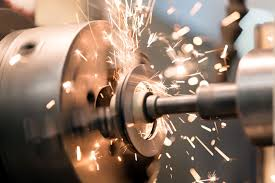
In a conventional lathe, the workpiece extends unsupported from the chuck. Cutting forces push against the material, causing it to bend away from the tool. The result is taper, chatter, and inconsistent dimensions—problems that get worse as parts get smaller and more slender. Swiss machines solve this by feeding material through a guide bushing positioned immediately next to the cutting tool. The workpiece is supported at the point of cut, eliminating deflection and enabling tolerances that would otherwise be impossible.
This matters enormously for product development. A design that calls for a 3 mm diameter shaft with a 20:1 length-to-diameter ratio is difficult or impossible to machine reliably on a conventional lathe. On a Swiss machine, it is routine. A Swiss machining manufacturing guide becomes essential reading for engineers evaluating whether their design can be produced consistently at volume, because the choice of machining process directly affects achievable tolerances, surface finishes, and production economics.
Modern Swiss machines also integrate multiple operations—turning, milling, drilling, threading—into a single setup. This “done-in-one” capability reduces handling, eliminates tolerance stack-ups between operations, and shortens cycle times. For a product development team, this means fewer process steps to validate, fewer opportunities for error, and a faster path from first article to production release.
The Materials Question
Product development always involves material decisions, and those decisions have manufacturing consequences. Stainless steel, aluminum, brass, copper, titanium, and engineering plastics each behave differently under cutting tools. Some work-harden rapidly if speeds and feeds are not optimized. Some conduct heat poorly, concentrating wear at the tool edge. Some are gummy, producing chips that wrap around tools and disrupt automated cycles.
A machining partner who has documented experience across multiple material families can help development teams avoid costly missteps. They can advise on alloy selection based on machinability as well as performance, recommend tooling strategies that extend tool life, and flag design features that will be difficult or expensive to produce at volume. This kind of input during the design phase prevents problems that would otherwise surface during pilot production—or worse, during full-scale manufacturing.
Quality Systems as a Development Tool
Quality control is often viewed as a production concern, but it plays a critical role during development as well. First Article Inspection reports, dimensional verification, thread and surface finish checks, and material traceability all provide the data that development teams need to make informed decisions. A prototype that passes inspection is not just a part—it is evidence that the design is manufacturable.
Suppliers who operate under ISO 9001, IATF 16949, or ISO 13485 quality systems bring a level of process discipline that benefits development programs. Their inspection protocols, documentation practices, and traceability systems are designed for regulated industries where failures are not acceptable. When a development team works with a supplier who already operates to these standards, the transition to production is smoother because the quality infrastructure is already in place.
Choosing a Partner for the Full Journey
The most effective manufacturing partnerships are those that span the entire development lifecycle—from the first prototype through pilot production and into volume manufacturing. This continuity matters because the knowledge gained during prototyping—which tooling works best, which parameters produce the required finish, which inspection methods are most effective—carries directly into production. When a new supplier is brought in at the production stage, that knowledge is lost, and the learning curve starts over.
A partner who supports the full journey also brings a broader perspective to design reviews. They can identify features that will be problematic at volume, suggest alternatives that reduce cost without compromising performance, and help development teams make decisions that will pay dividends months later when production begins. This is not a transactional relationship. It is a collaborative one, built on shared understanding of both the design intent and the manufacturing reality.
The Bottom Line
Product development is a process of reducing uncertainty. Every prototype, every pilot run, every inspection report is a step toward confidence that the product can be made reliably and economically. CNC machining supports that process by providing fast, accurate, material-accurate parts for validation; by enabling pilot production on production-equivalent equipment; and by delivering the quality documentation that regulated industries require.
For teams developing complex, precision-dependent products, the choice of machining partner is not a procurement detail—it is a strategic decision. The right partner brings not just equipment but process knowledge, material expertise, and a commitment to quality that carries from the first prototype through the last production part. In an era where time-to-market and product reliability determine success, that partnership is one of the most valuable assets a development team can have.
