

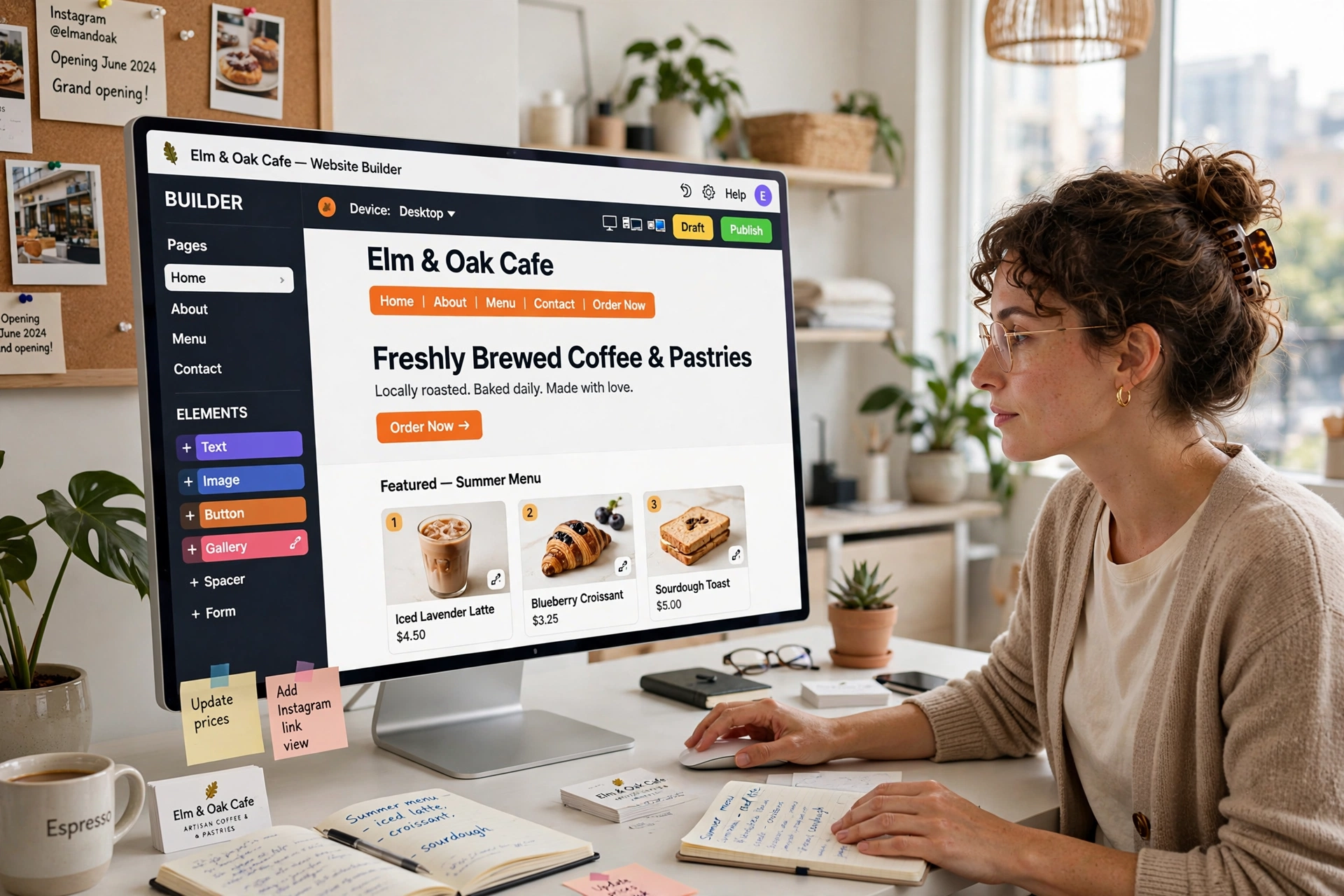
Not long ago, launching a business website meant hiring a designer, waiting weeks for mock-ups and paying again every time you wanted to change a headline. In 2026, a growing share of small businesses are doing something very different: describing their business to an AI website builder in the morning and taking online orders by the afternoon.
The tools have matured quickly. Modern AI builders generate layouts, write first-draft copy, select images and even wire up booking forms, contact pages and basic online stores. The result is not a rough template — it is a coherent, mobile-friendly site that a non-technical owner can realistically maintain alone.
Why small businesses are adopting them
Cost is the headline reason, but speed matters just as much. A café that needs a menu page today, a tradesperson who wants a quote form this week, or a consultant testing a new service cannot wait a month for an agency slot. AI builders compress the whole process into a single sitting.
Quality has crossed a threshold too. Automatic responsive design, built-in SEO basics such as meta tags and sitemaps, and sensible accessibility defaults mean the output is presentable out of the box. Usage statistics tracked by W3Techs show website builders powering a steadily rising share of the web, and AI features are accelerating that climb.
What the tools still cannot do
There are limits, and honest reporting matters here. AI-generated copy tends toward the generic unless owners edit it with their own voice, prices and customer stories. Complex e-commerce, custom integrations and distinctive brand design still reward professional help. Coverage of the sector by outlets such as TechCrunch regularly notes the same pattern: AI handles the first 80 percent brilliantly, and humans remain essential for the rest.
Owners should also read the fine print. Some builders make it hard to export a site elsewhere, and subscription prices can creep up as features are added. Keeping your own domain name, and your content backed up, protects your freedom to move later.
A sensible way to start
The businesses getting the most from these tools follow a simple playbook: launch fast with AI, then improve weekly. Swap in real photographs, rewrite the homepage in your own words, add customer reviews, and check the site on a phone — most visitors will see it there first. On News Page Builder we test new releases against exactly those practical criteria.
If you are comparing platforms, our latest reviews and guides break down pricing, export options and support quality so you can choose with your eyes open.
The bottom line
AI website builders have not replaced designers; they have replaced the blank page. For a small business in 2026, the question is no longer whether you can afford a professional website, but how quickly you can put one live and start improving it. The tools are ready — the advantage goes to owners who actually ship.
