

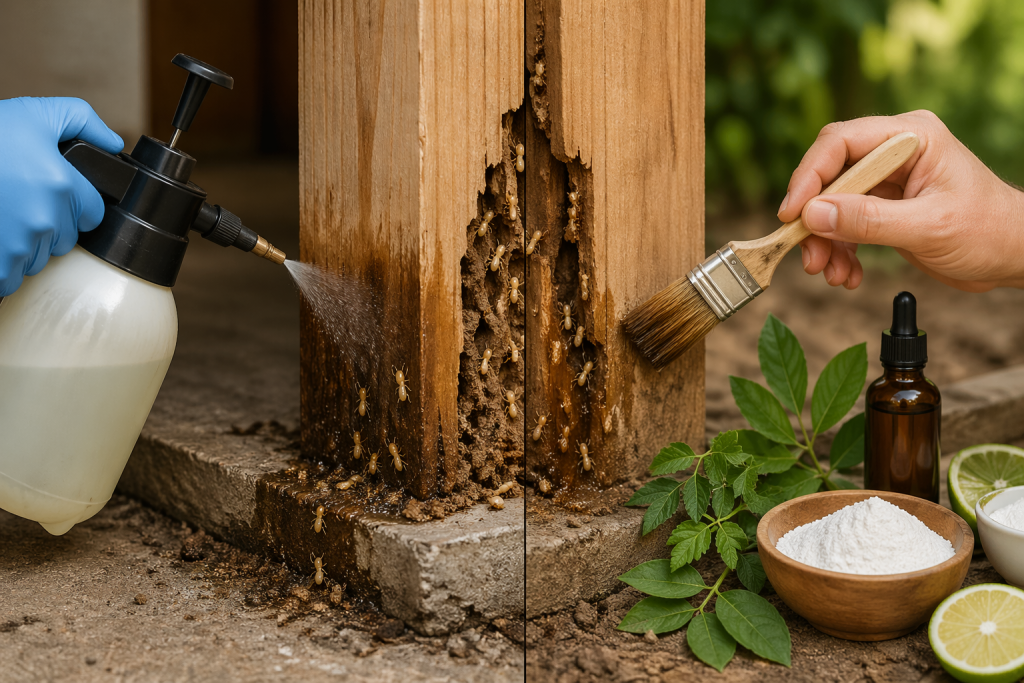
Termites: the tiny freeloaders who gatecrash your Australian dream and feast on your home as if it’s their personal all-day buffet. Thanks to our warm, snack-friendly climate, these wood-chomping troublemakers consider our houses prime real estate. When these munching minions move in, homeowners are faced with that inevitable fork-in-the-road: how to send them packing – and make sure they don’t RSVP for a return.
Understanding the real difference between chemical firepower and Mother Nature’s own solutions is your best defence for keeping the timber blues at bay.
Understanding Chemical Treatments: Pros and Cons
Chemical treatments – think termite evictor in a bottle – are usually soil sprays or injections calibrated to send colony-wide shockwaves through the woodwork. The hit? These powerhouse formulas clear out the termite underworld fast and set up an invisible “do not enter” sign to keep invaders off your turf. It’s tried, it’s tested, and pest experts love it for a reason.
But (there’s always a but), chemical blitzes have baggage. They might turn your rose garden into a science lab, stir up that unmistakable “eau de pesticide,” and bring a round of drilling so thorough your home might need a week off to recover. Your sanctuary could temporarily resemble a renovation zone – minus the home improvement payoff.
Exploring Natural and Eco-Friendly Alternatives
Prefer to keep it green? Enter the eco-warrior options, where orange oil and neem oil show termites the door with botanical bravado. These plant-based potions mess with termite biology, and if you’re feeling adventurous, unleash an army of microscopic nematodes to hunt down the invaders in your soil.
Eco-friendly means you get to feel good while doing good – there’s hardly any harsh residue, so your neighbour’s nosy cat (or wandering toddler) stays safe. The trade-off? You might need more than one visit to persuade the pests to leave, and if the termites have already installed a wood-panelled spa beneath your feet, gentle methods may fall short.
Safety Considerations for Families and Pets
When you’re choosing your termite treatment for wood, safety isn’t just a checkbox – it’s the whole checklist, especially with kids or furry housemates in tow. Hardcore chemicals come with rules: masks, moving out (briefly), and nervously sniffing the air to see if it’s safe yet. Nobody dreams of a backyard campout, especially if you didn’t plan it.
Natural alternatives steal the show here: light on risk, big on convenience. Most plant-based solutions let you stay home, keep your routine, and reduce the likelihood of accidental taste tests to almost zero.
How to Choose the Right Method for Your Home
Picking your pest-control path is a bit like choosing your own adventure. Spotted a few rogue termites? A quick shot of natural oil could save the day. Discovered your subfloor is now hosting a full-blown termite rave? Chemical reinforcements might be the only ticket out.
Still not sure? Bring in a licensed Aussie pest detective. These experts have a nose for hidden termite hideouts and can whip up a plan that balances knockout strength with just the right amount of eco-friendliness for your taste.
Defending Your Timber Investment for the Long Haul
Termites bring the drama, but you get to write the ending. By weighing up these choices and acting fast, you dodge the disaster and keep your wooden fortress standing tall. Don’t wait for that telltale chewing to turn into a remodelling nightmare – call in the professionals, guard your prized real estate, and rest easy knowing your home is yours (and not the local termites’ next big meal).