

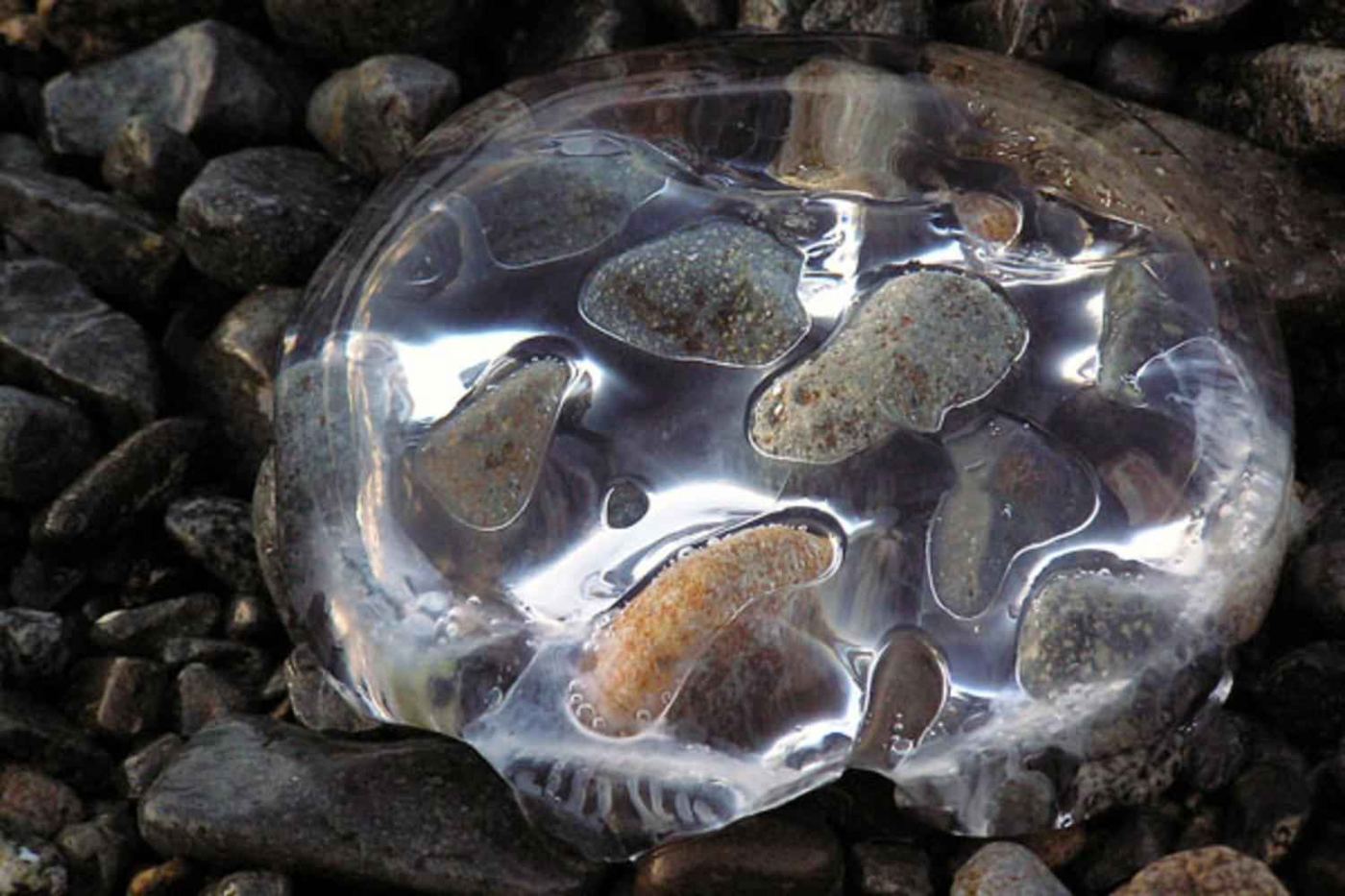
Scientists have formally described the first salp species known to live only in the deep sea, a glassy creature named Vitreosalpa gemini found in Monterey Bay, California. The description was published on 25 November 2026 in the journal Marine Biodiversity by Larry Madin, deputy director emeritus at the Woods Hole Oceanographic Institution and an adjunct researcher at the Monterey Bay Aquarium Research Institute. Researchers first spotted the unfamiliar salp more than 20 years ago, and thousands of observations by underwater robots have now helped describe it in detail. The salp lives in the ocean’s twilight and midnight zones, between 280 and 2,200 metres below the surface.
What the Evidence Shows
Salps are soft-bodied animals that drift through open water and filter food from it, and most species live near the surface where sunlight feeds plankton. Vitreosalpa is different: it lives below the sunlit layer, filtering detritus and single-celled protozoans from the water, with feeding and metabolic rates far lower than its surface-dwelling relatives. In a rare feature among salps, its aggregates make twin embryos, which researchers suggest may help boost reproduction in the sparsely populated deep sea. The discovery shows how much remains unknown about the deep ocean, the planet’s largest living space, and how robotic observations can reveal animals that would otherwise be easy to miss. Reporting and analysis from sources such as NASA track the same developments, and specialists following the first deep-sea-only salp say the direction is now consistent across independent lines of evidence.
The Wider Context
Funding bodies are watching the first deep-sea-only salp closely because the work sits at the junction of basic curiosity and practical return. Grant panels increasingly ask for a path from discovery to application, while researchers push back that the most valuable uses of fundamental science are rarely the ones written into the original proposal. The tension is productive when both sides stay honest about timescales.
What Happens Next
The long view on the first deep-sea-only salp is that fields advance by accumulation rather than by single announcements. This result adds a solid, checkable piece to a structure many teams are building, and its authors have shared their data so the piece can be tested from every side. That is how the picture eventually becomes reliable enough to act on. You can follow related developments in our coverage of science.
It is also worth remembering how quickly the picture in this area has changed before. Positions that looked settled a few years ago have been revised as new data arrived, and the same humility is appropriate now. The strongest coverage of this subject, and the most useful advice, tends to come from sources that update their views openly when the facts move, rather than defending an earlier position long after it has stopped fitting the evidence available.
