

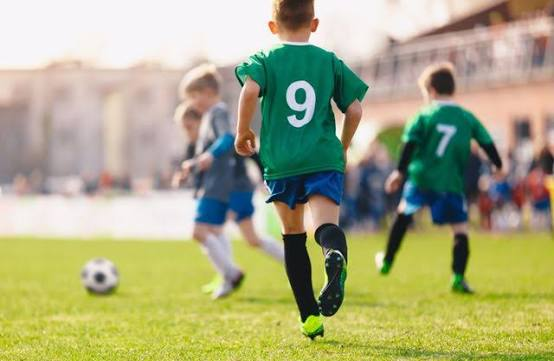
Most parents who enroll their child in recreational soccer are not thinking about elite development. They want their child active, social, and having fun. But somewhere along the way, something shifts. The child starts watching games on their own. They practice in the backyard without being asked. They get frustrated after losses in a way that goes beyond disappointment. These are not random behaviors — they are indicators that a child’s relationship with the sport has changed in a meaningful way.
Recognizing that shift matters because timing affects outcomes. Moving into one-on-one coaching too early can create pressure a child is not ready to absorb. Waiting too long can mean missed development windows during formative years of motor learning. Neither outcome serves the athlete. What parents need is a clear, practical framework for reading the signals accurately — and then understanding what structure and quality of coaching will actually serve their child well.
Understanding What Private Soccer Coaching Actually Involves
Before assessing readiness, it helps to understand what this type of training looks like in practice. Private soccer coaching is structured, one-on-one or small-group instruction that targets specific skill gaps, accelerates technical development, and builds tactical awareness at a pace and depth that team practice cannot offer. Unlike group sessions where a coach manages many players at once, individual coaching sessions create a direct feedback loop between coach and athlete. Every repetition is observed. Every error is addressed in real time.
This format demands active engagement from the player. There is no blending into the group, no waiting your turn for a drill. The athlete is the center of attention for the entire session, which can be rewarding for players who are genuinely invested, but exhausting or counterproductive for those who are not yet ready for that level of focus. Understanding this dynamic is the starting point for any honest readiness conversation.
For families exploring this path, resources focused on private soccer coaching can help clarify what structured individual development programs typically include and how they are designed to support long-term athletic growth.
Sign One: The Child Seeks Out Practice Without Prompting
Self-directed practice is one of the clearest early indicators of genuine readiness. When a child picks up a ball and starts working on a skill outside of scheduled team time — without a parent or coach suggesting it — that behavior reflects intrinsic motivation rather than external compliance. This distinction matters more than it might initially appear.
Why Internal Motivation Changes the Value of Coaching
Coaching is most effective when the athlete wants to improve. A coach can teach technique, structure repetition, and provide feedback, but they cannot manufacture desire. Children who practice voluntarily are already in a mental state that makes coaching investment worthwhile. They ask questions. They try corrections more readily. They carry the work from a session into their next team practice. Without that internal drive, the same coaching sessions produce far less return — not because of the coach’s quality, but because the learner is not yet in a receptive state.
Sign Two: The Child Has Specific Questions About Their Own Performance
Children who ask targeted, self-aware questions about their game are displaying a level of metacognition that supports structured development. This is different from a child who asks general questions out of curiosity. It is the player who says, “Why can’t I get the ball to go where I want when I cross it?” or “How do I know when to pass and when to dribble?” These are not casual observations. They reflect a child who is already analyzing their own performance and looking for tools to improve it.
Self-Awareness as a Coaching Prerequisite
Effective coaching relies on a player’s ability to receive feedback, process it, and apply it under pressure. A child who already notices their own errors is much closer to being able to use feedback constructively. Coaches working with self-aware players can move faster through foundational corrections and spend more time on higher-level concepts. For children who have not yet developed this layer of awareness, the coaching relationship often slows down significantly — not because the child lacks talent, but because they have not yet built the internal reference points that make corrective instruction actionable.
Sign Three: Team Practices No Longer Feel Challenging
When a technically advanced child moves through team drills without effort, it is not a sign of arrogance — it is a sign of outpacing the current environment. Team coaches manage group dynamics, match-day preparation, and player confidence across a wide skill range. They cannot consistently challenge every individual player at their own ceiling. This is a structural reality of team coaching, not a failing.
The Risk of Under-Challenge During Development Years
Children who are regularly unchallenged in their primary training environment can develop habits that become difficult to correct later. Easy success with sloppy technique reinforces that sloppiness. Comfort in low-pressure drills does not prepare a player for high-stakes decision-making. Research in long-term athletic development, including frameworks supported by organizations like FIFA, consistently emphasizes that the training environment must provide appropriate challenge to produce lasting technical growth. A child who has outgrown the challenge level of team training is not being served well by that environment alone.
Sign Four: The Child Responds Well to Criticism
Readiness for individual coaching is as much emotional as it is technical. In a team setting, correction is distributed across many players. In a one-on-one session, every piece of feedback is directed at one child. For players who are emotionally fragile around performance criticism, this environment can be counterproductive. But for children who receive feedback without shutting down — who try again, adjust, and move forward — individual coaching becomes a significant accelerant.
How Emotional Readiness Shapes the Coaching Relationship
Coaches who work in individual settings describe emotional regulation as one of the most important variables in player progress. A technically skilled child who becomes distressed when corrected will spend session energy managing emotions rather than absorbing instruction. Parents are often better positioned than coaches to assess this dimension honestly. Watching how a child responds to correction at home, in school, or during recreational play provides useful signal before committing to a coaching structure.
Sign Five: The Child Has Identified a Position They Want to Develop In
When a young player begins to identify with a specific position and wants to understand it more deeply, they are demonstrating both focus and strategic thinking. Position-specific development requires a different kind of coaching than general skill-building. A goalkeeper needs fundamentally different technical work than a central midfielder. A child who says, “I want to be a better striker — how do I read the defender?” is asking a position-specific question that team practice rarely has time to address properly.
Sign Six: The Child Has Hit a Technical Plateau
Plateaus in athletic development are normal and expected. Progress is rarely linear. But when a player has been working within the same environment for an extended period without visible technical improvement, the environment itself may be the limiting factor. This is not about effort or talent — it is about whether the current structure is still generating the right kind of challenge and feedback to produce growth.
Diagnosing a Plateau Versus a Temporary Stall
A temporary stall often resolves on its own as a child physically matures or settles into a new team dynamic. A true plateau has a different character — it persists across seasons, shows up in specific skill areas repeatedly, and is often recognized by the child themselves. Parents who observe this pattern should consider whether the child needs a structural change in how they are being trained, not just more repetition of the same work.
Sign Seven: The Child Has Expressed a Long-Term Goal in the Sport
A child who says they want to play at a higher level — a select team, a school team, a regional program — is expressing future orientation. They are connecting present effort to future outcomes, which is a cognitive and motivational shift that signals genuine readiness for more serious investment. Private soccer coaching at this stage becomes not just about skill development, but about preparing a player to succeed in more competitive environments.
What to Look for When Selecting a Coach
Identifying readiness in the child is only half the equation. The coach’s background, communication style, and coaching philosophy matter equally. A qualified coach for individual youth development should demonstrate clear session structure, the ability to adapt instruction to a player’s learning pace, and a willingness to set measurable short-term goals. Parents should also assess whether the coach understands youth development specifically — working with children requires different approaches than coaching adult or professional players.
Beyond credentials, observe how a coach communicates during a session. Do they explain the reason behind a correction, or simply repeat the instruction louder? Do they adjust when something is not working, or continue the same approach? These behaviors reflect a coach’s actual methodology, which is more informative than any list of qualifications.
Closing Thoughts
The decision to pursue individual coaching for a young soccer player should not be driven by external pressure, comparison with other families, or a coach’s general recommendation. It should come from a clear-eyed reading of the child’s own development, motivation, and readiness to absorb structured instruction. When those conditions align, private soccer coaching can produce meaningful results — not because the coaching itself is exceptional, but because the athlete is positioned to use it well. The signs outlined here are not a checklist to complete — they are patterns to observe honestly over time. When several of them appear consistently, the case for investing in individual development becomes sound.
