

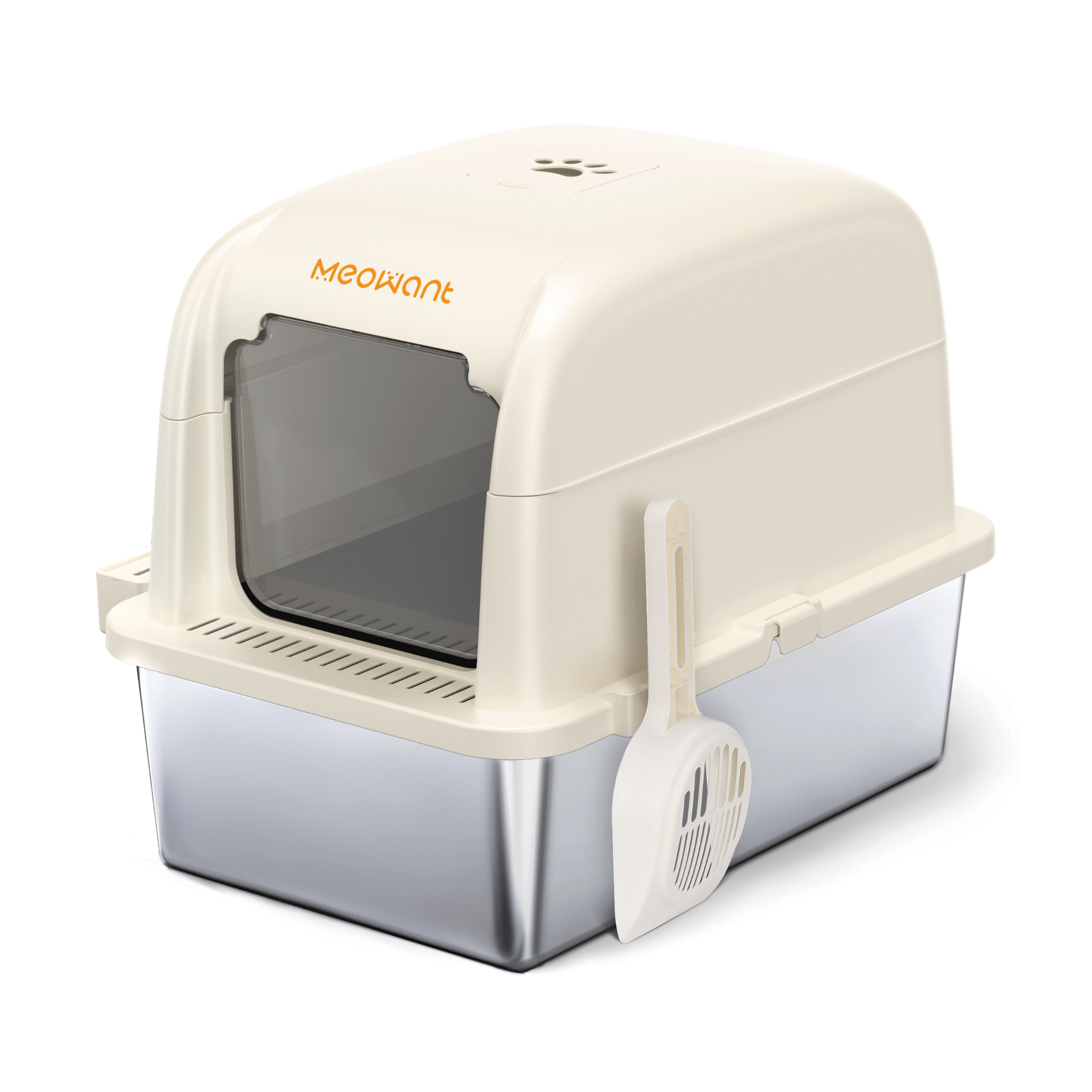
Every cat owner eventually faces the same quiet question: is scooping by hand still the best way to keep a litter box clean, or has automation finally caught up? The debate rarely splits neatly along cost lines. Some households swear by the five-minute morning ritual, arguing that hands-on scooping is the only way to notice subtle changes in a cat’s health. Others have moved to a self-cleaning unit and never looked back, trading the daily chore for a cycle that runs while they are at work.
The truth sits somewhere in the middle. A manual box rewards attention and costs almost nothing to maintain, while an automatic one rewards consistency and asks for a larger upfront commitment. Which side wins depends less on the technology itself and more on your schedule, your cat’s temperament, and how much tolerance your nose has for a box that has gone a day too long. This comparison walks through both options honestly, including the parts vendors rarely mention.
The Daily Reality of Manual Scooping
A manual cat litter box is simple by design, and that simplicity is its strongest argument. There is no motor to fail, no sensor to recalibrate, and no firmware update standing between your cat and a clean place to go. You scoop once or twice a day, top up the litter, and do a full wash every couple of weeks. The tools cost little, the learning curve is zero, and replacement parts are not a line item in your budget.
What the chore actually costs you
The real expense is attention. Scooping takes a few minutes, but it also anchors you to the house twice a day. Skip a session and the box starts to smell; skip a weekend and your cat may begin looking for alternatives behind the sofa. For people who work from home or keep a small apartment, that rhythm is easy to hold. For shift workers, frequent travelers, or anyone managing a multi-cat household, the same rhythm becomes a source of guilt and last-minute scrambling before guests arrive.
There is also a skill dimension that automation erases. A person who scoops daily learns their cat’s normal output, notices when a clump looks smaller or a visit happens at an odd hour, and often spots trouble before a vet would. That knowledge is hard to quantify, but it is real, and it is the strongest argument for staying hands-on if your schedule allows it.
Where manual boxes still make sense
Manual boxes remain the better fit for kittens under a few months old, cats recovering from surgery, and seniors who need a low entry. They are also the honest choice for anyone who wants to inspect every clump, because that daily look is often how early urinary problems get caught. If your cat is nervous around moving parts, a plain open box removes an entire category of stress.
Where a Self-Cleaning Box Changes the Equation
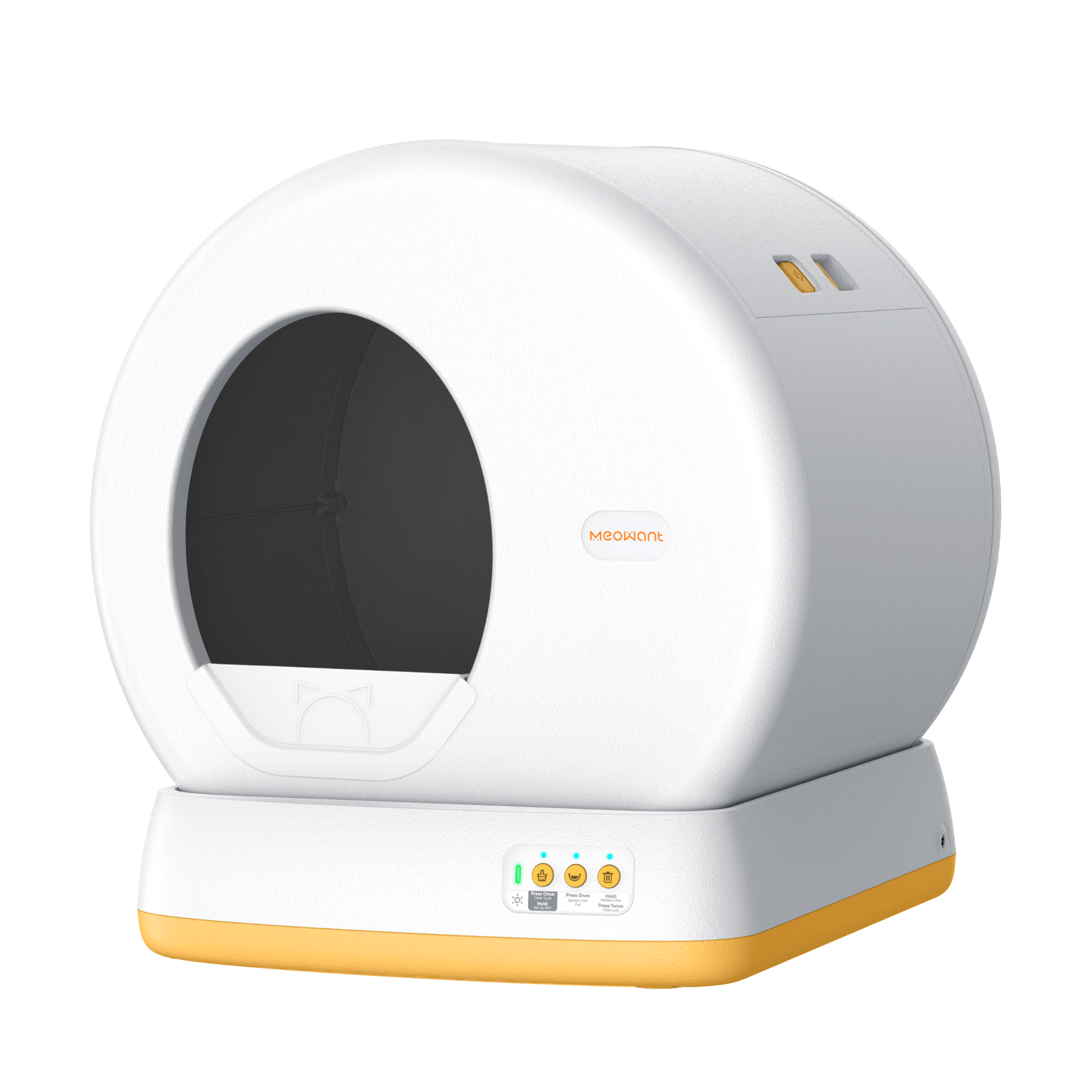
An automatic unit runs a rake or a rotating drum on a timer, sifting clumps into a sealed drawer and leaving a fresh bed of litter behind. The appeal is not luxury so much as reliability: the box gets cleaned on schedule whether you are home, late, or asleep. In households where the litter box is the most common source of friction, that predictability alone can justify the switch.
How the cycle works in practice
Most models wait a set delay after your cat leaves, then sweep the surface and drop waste into a lined compartment. The drawer needs emptying every few days depending on how many cats you have, and the litter level needs occasional topping up. That is a far lighter routine than twice-daily scooping, but it is not zero maintenance, and anyone expecting a truly self-sufficient box will be disappointed within the first week.
The delay is worth understanding, because it exists for safety. The unit waits long enough for your cat to leave before the rake moves, which means a curious cat that returns to inspect the mechanism can interrupt a cycle. That is normal and not a malfunction, but it does mean the machine needs a clear path and a stable power supply to behave predictably.
What it does not solve
Automation does not fix a box that is too small, poorly placed, or filled with litter your cat dislikes. It also does not replace observation. A machine will happily cycle over a cat that is straining or visiting more often than usual, and those are exactly the signals you want to catch early. Self-cleaning units work best as a supplement to attention, not a replacement for it.
Mechanical failure is the other gap. Motors stall, sensors misread, and a jam can leave the box in a half-swept state while you are at work. Models with a manual cycle button and a clear jam indicator recover faster, and keeping a spare manual box in the house turns a mechanical problem into an inconvenience rather than a crisis.
Comparing the Ongoing Costs and Effort
On paper, a manual box wins the budget contest. You buy a box, a scoop, and litter, and that is the end of it. An automatic unit costs more upfront and typically uses a little extra litter because the cycle keeps the bed deeper and more even. Add liners, filters, and the occasional replacement part, and the yearly difference becomes real, though rarely dramatic when spread across the unit’s lifespan.
The effort comparison flips in the other direction. Manual scooping asks for a few minutes twice a day, every day, without exception. An automatic box asks for a few minutes every few days, plus a deeper clean once a month. Over a year, that is dozens of hours reclaimed, which matters most for people whose schedules already feel stretched. The trade is straightforward: you pay more money to buy back time and consistency.
Litter consumption is the overlooked line item. Automatic units keep a deeper, more even bed and sift finer particles into the drawer, so a bag tends to empty faster than it would with a manual box. That is a small recurring cost, but it is worth factoring in before comparing the two options purely on purchase price.
There is also a hidden cost to inconsistency. A box that is cleaned sporadically drives cats to avoid it, and avoidance is far more expensive to fix than either box type. If your current routine depends on remembering, an automated cycle removes the weakest link.
Electricity and parts add a little more. Motors draw very little power, but filters, liners, and the occasional replacement rake are real costs over several years. None of this makes automation unreasonable; it simply means the comparison should be made over the life of the unit rather than at the checkout counter.
Matching Either Option to Your Cat
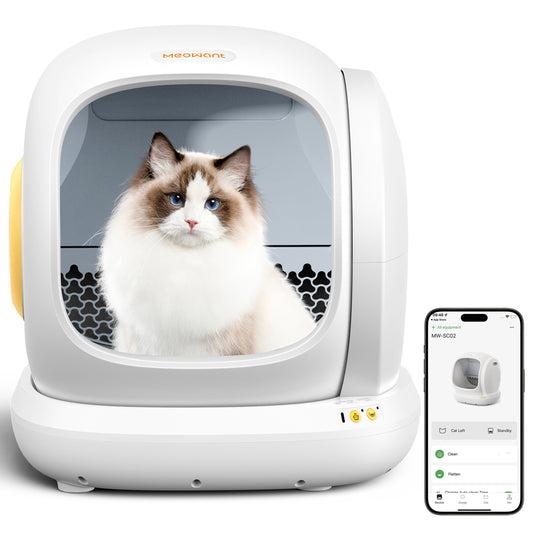
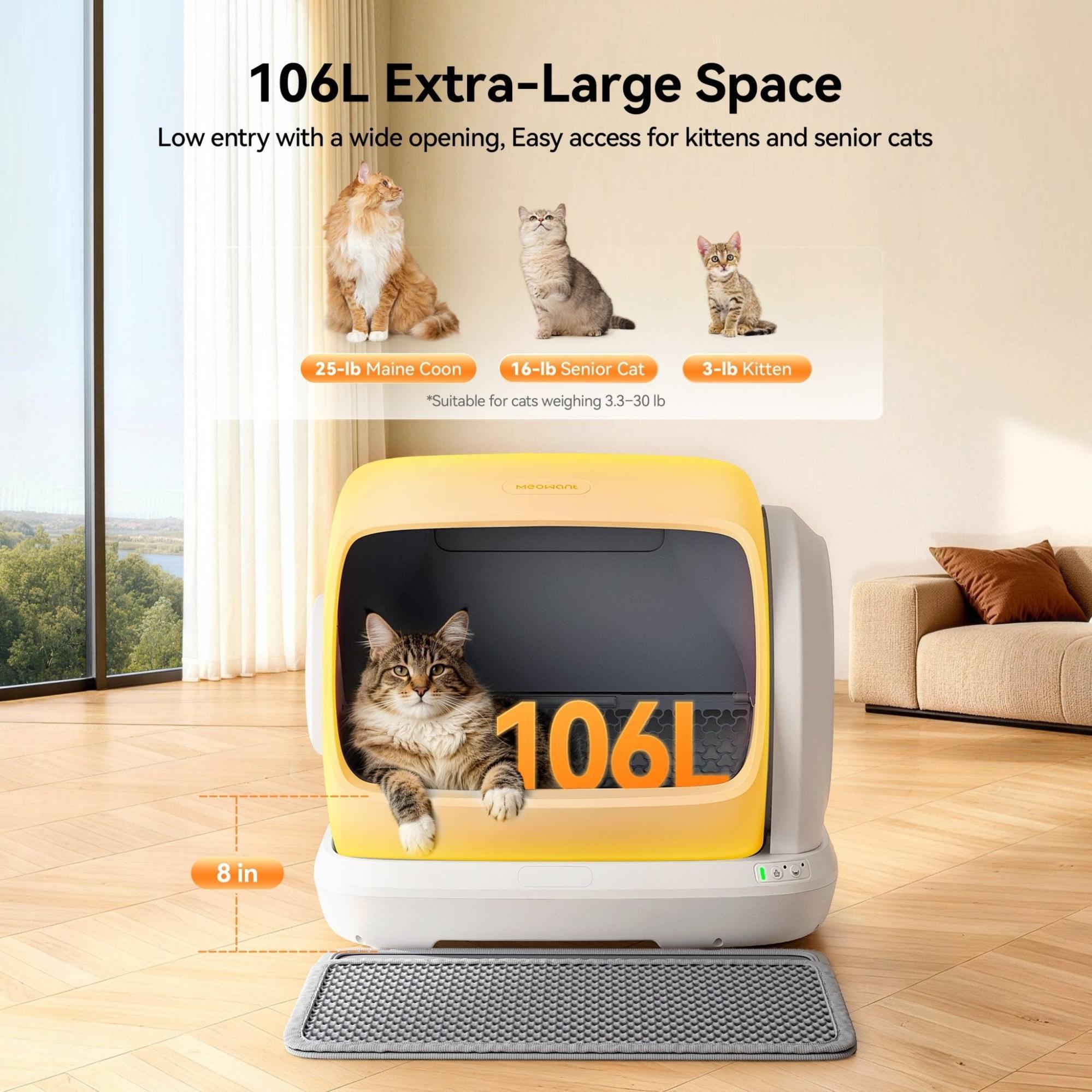
Cats are conservative about elimination habits, and the box is the one piece of furniture they cannot negotiate. Size matters more than most owners expect: a box should be roughly one and a half times the length of your cat, with room to turn around. Height matters too, especially for seniors and kittens who struggle with a high lip.
Temperament decides the rest. Confident cats adapt to a cycling unit within days, particularly when it is introduced alongside the old box and not in place of it. Anxious cats may need weeks, and some never accept the motion at all. Watch for the signs: hovering at the entrance, eliminating beside the box, or holding it in until you arrive home. Any of those means the change is moving too fast, not that the cat is being difficult.
Households with several cats need more than one station regardless of type. The usual guidance is one box per cat plus one spare, and that rule does not relax just because a unit is automatic. Crowding is the most common cause of avoidance, and no amount of technology compensates for a queue at the door.
Whichever route you take, introduce change slowly. Set the new box beside the old one, let your cat use both for a week, then remove the old box only after the new one is clearly in use. Cats that are rushed into a switch often respond by avoiding both, which turns a simple upgrade into weeks of cleanup and stress.
Weighing Convenience Against Control
Neither option is universally better, and the honest answer depends on what your household struggles with most. If your problem is remembering, a self-cleaning unit fixes it directly; brands such as Meowant design their automated boxes around exactly that gap between good intentions and busy evenings. If your problem is a nervous kitten, a recovering cat, or a tight budget, a manual box remains the safer and cheaper path.
What matters most is not the mechanism but the standard: a clean surface, enough space, and a location your cat trusts. Automation is a tool for meeting that standard consistently, and manual scooping is a tool for meeting it attentively. Choose the one that matches your life, introduce it patiently, and keep watching your cat rather than the machine. The box that gets used reliably is always the right one, whether it sweeps itself or waits for your hand.
