

Learn how SD-WAN improves network performance, reliability, and security for distributed enterprises with clear steps for planning and deployment.
Introduction
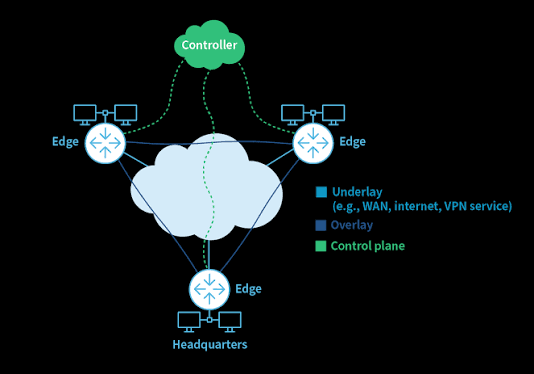
Software-defined wide area networking, commonly called SD-WAN, is a modern approach to connecting branch sites, data centers, and cloud services.
It separates control functions from hardware to provide more flexible routing and simpler operational models for distributed environments.
What SD-WAN Is and How It Works
At its core, SD-WAN shifts traffic decision-making from individual devices to a software-based control plane. This control plane applies policies that map business intent to routing actions across multiple transport links.
For organizations looking to strengthen their edge infrastructure, secure SD-WAN branch networking for enterprises provides a proven framework for unifying connectivity, policy enforcement, and visibility across all distributed sites.
Key Performance Benefits
SD-WAN improves user experience by steering application flows onto the best available path. That can reduce latency for interactive apps and prevent jitter for voice and video.
A centralized policy model lets teams enforce consistent quality rules everywhere. This reduces troubleshooting time and keeps business-critical services responsive.
Transport and Path Selection
Modern SD-WAN solutions continually measure latency, jitter, and loss on each link and change paths when thresholds are crossed. This maintains sessions and keeps applications stable during transient outages.
For government and critical infrastructure guidance on network resilience and best practices, see the National Institute of Standards and Technology at https://www.nist.gov.
Traffic Prioritization and QoS
Traffic classification assigns tags or labels based on application, user group, or device type. Policies then reserve bandwidth for latency-sensitive streams while limiting background traffic.
Careful QoS planning avoids contention and preserves throughput for core services without over-provisioning expensive circuits.
Enhanced Reliability and Failover
Fast failover is a key benefit: when a primary link degrades, sessions can shift to an alternate path within milliseconds. This reduces dropped calls and application timeouts.
Academic research on network routing and optimization can offer deeper methods for tuning path selection;
Security Considerations
Security should be integrated into SD-WAN from the start instead of added later. Look for built-in encryption, granular segmentation, and centralized policy enforcement that map to compliance needs.
Public guidance on cyber resilience and incident response can help align controls and processes; relevant resources include the Cybersecurity and Infrastructure Security Agency.
Segmentation and Policy Enforcement
Segmenting traffic into logical zones reduces risk by limiting lateral movement if an endpoint is compromised. Each segment can have tailored access and inspection rules.
Enforce policies at the network edge so that traffic is inspected and filtered before it reaches sensitive systems. Consistent audits make compliance reporting simpler.
Branch and Cloud Connectivity
SD-WAN routes branch traffic directly to cloud providers or SaaS offerings when appropriate. This minimizes backhaul and reduces load on central data centers.
Direct cloud on-ramps improve response times for cloud-hosted applications and can lower overall transit costs when planned carefully.
Centralized Management and Orchestration
A single control console gives visibility into topology, device state, and application health across the estate. That reduces the need for local device access and speeds incident response.
Orchestration supports automated tasks like bulk firmware updates, zero-touch provisioning, and template-driven configurations to reduce manual errors.
Monitoring and Analytics
Dashboards show link quality, per-application throughput, and historical trends. Those signals help teams spot recurring issues and plan capacity before problems occur.
Export telemetry to your existing monitoring stack to correlate network events with application incidents and to enable faster root-cause analysis.
Planning a Migration to SD-WAN
Begin with a clear inventory of sites, circuits, and applications. Map flows and note which applications are sensitive to latency or jitter.
Set measurable goals such as percent reduction in latency for specific apps, reduced monthly transport spend, or target uptime improvements before starting migration.
Proof of Concept and Pilots
Run pilots at representative sites that mirror typical conditions, such as high-traffic retail locations or remote offices with limited bandwidth. Use real production traffic where possible.
Measure baseline metrics and compare pilot performance. Validate operational procedures like failover, policy updates, and remote troubleshooting.
Deployment Best Practices
Roll out in phases, prioritizing locations with the highest expected benefit or greatest risk. Use standardized templates for device configuration and policy to maintain consistency.
Include a rollback plan and staged testing windows for each phase so you can catch issues early and limit business disruption.
Cost and Return on Investment
Calculate both capital and operational savings. Common benefits include the ability to replace expensive private circuits with lower-cost broadband while keeping performance high.
Include non-monetary gains such as faster recovery from outages, lower support hours, and improved employee productivity when estimating total return.
Operational Readiness and Staffing
Confirm that staff have the skills to manage software-defined policies and to interpret analytics. Assign clear roles for policy authors, operators, and incident responders.
Offer targeted training and maintain up-to-date runbooks to reduce time to resolution for common incident handling and configuration tasks.
Interoperability and Vendor Choice
Select platforms that support open protocols and well-documented APIs to ease integration with existing security and monitoring tools. Check compatibility with current edge devices and orchestration systems.
Assess vendor support, professional services, and partner ecosystems. These factors matter as much as feature lists when long-term operations are considered.
Common Challenges and How to Address Them
Typical obstacles include legacy equipment, application behavior tied to specific paths, and organizational resistance to process change. Address these with phased pilots and stakeholder engagement.
Document testing results and craft change communications that explain benefits in operational terms, such as reduced outage windows and faster mean time to repair.
Maintenance and Continuous Improvement
Treat SD-WAN as a living system. Regularly review policies, update application classifications, and tune thresholds based on observed performance.
Schedule periodic audits of configuration and security posture to detect drift. Continuous improvement cycles keep the network aligned with changing business needs.
Case Studies and Use Cases
Retail chains, distributed professional services, and remote healthcare sites commonly use SD-WAN to unify operations across many locations. Many report faster recovery after outages and simplified management.
Capture lessons learned during early rollouts and build a reusable knowledge base to accelerate future deployments and troubleshooting.
Summary of Key Technical Steps
1) Inventory applications and traffic. 2) Design segmentation and enforceable policies. 3) Pilot with representative sites. 4) Roll out in controlled phases. 5) Monitor, measure, and refine.
Adhering to these steps reduces risk and helps teams achieve measurable improvements in performance, availability, and cost control.
Regulatory and Compliance Notes
Map regulatory needs technical controls early. Requirements for encryption, logging, and data retention may affect design choices at the edge and in the cloud.
Work with legal and compliance teams to document controls and produce evidence for audits when required.
Future Trends to Watch
Expect tighter alignment between networking and security teams, greater automation of routine tasks, and richer analytics for predictive operations. These trends will speed problem resolution.
Edge computing growth and expanding cloud footprints will change traffic patterns. Revisit policies frequently to keep the network tuned for evolving application needs.
Conclusion
SD-WAN technology offers a practical way to improve network performance and resilience for distributed organizations. With clear goals, phased pilots, and integrated security, teams can reduce costs and improve user experience over time.
FAQ
What is the main advantage of SD-WAN?
The main advantage is more direct control over how traffic is routed across multiple transport links, which can reduce latency, improve availability, and simplify management.
Can SD-WAN replace existing security controls?
SD-WAN can include security features such as encryption and segmentation, but it should complement a broader security architecture rather than replace it.
Is SD-WAN suitable for small branch offices?
Yes. SD-WAN can reduce reliance on costly private circuits and provide better application performance for remote and small branch offices.